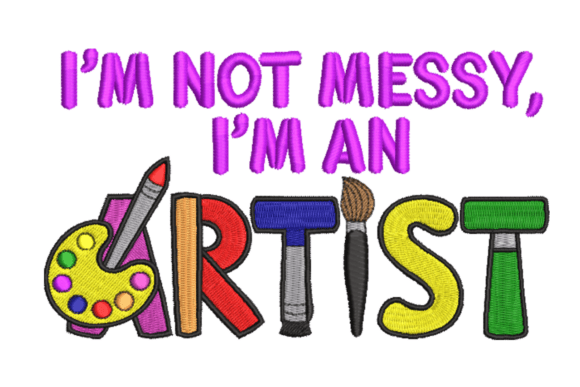
Review: I’m Not Messy I’m an Artist for Business
As an embroidery designer who has spent years digitizing files for small businesses, boutique brands, and creative studios, I approach every new machine embroidery design with a critical eye. It is not just about whether the artwork looks cute on a screen; it is about how that design performs in the real world of commercial production. Recently, I reviewed the I’m Not Messy I’m an Artist design, specifically evaluating its potential for branded merchandise and professional use. While the phrase itself carries a playful, relatable tone often associated with the Back To School season or creative workshops, my focus here is strictly on its viability as a asset for business owners, apparel decorators, and Etsy sellers looking to elevate their product lines.
First Impressions: Visual Personality and Brand Fit
The immediate impression of I’m Not Messy I’m an Artist is one of approachable professionalism mixed with a touch of whimsy. For a brand, this duality is powerful. It does not scream "corporate sterile," nor does it feel too chaotic to be taken seriously. Instead, it strikes a balance that feels handmade, friendly, and authentic. This visual personality is crucial for businesses that rely on personal connection, such as local bakeries, independent bookstores, art supply shops, and creative studios.
When considering this as part of your brand identity, ask yourself if your customer base values transparency and humor. The text suggests a narrative of creative chaos turned into structured beauty, which resonates deeply with artisans and makers. If your business sells handmade product items, this design acts as a badge of honor. It tells the customer that behind the polished finished product is a human being who embraces the process. However, for high-end luxury brands or strict corporate environments, this design might feel too casual. It is best suited for brands that want to appear accessible, creative, and grounded.
Real-World Applications for Small Business Merch
The true test of any digital embroidery file is its versatility across different substrates and products. I evaluated how I’m Not Messy I’m an Artist would perform in several common commercial scenarios.
Staff Uniforms and Apron Embroidery
For cafes, florists, and pottery studios, staff uniforms are walking billboards. Placing this design on an apron is a strategic move. It serves as an icebreaker with customers and reinforces the artisanal nature of the service. When digitized correctly, the text should sit comfortably on the chest or lower bib of the apron. It adds character to what is often a plain utility garment. Ensure that the thread colors contrast well with the apron fabric; a cream thread on a navy canvas apron, for example, offers a classic, rugged look that withstands frequent washing.
Embroidered Patches and Product Labels
One of the most profitable uses for this design is as an embroidered patch. Patches allow for pre-production quality control and can be applied to various items later. You can sew these patches onto tote bags, denim jackets, or even use them as unique hang tags for your products. Because patches are separate from the garment, you can perfect the stitch density and tension without worrying about puckering delicate fabrics. This makes them ideal for small business merch bundles or as add-on items at checkout.
Cap Embroidery and Tote Bag Design
Using this phrase on caps requires careful attention to curvature. The text needs to be arched slightly to follow the natural shape of the cap front. If the lettering is too long, it may distort on smaller cap panels. Similarly, for tote bag design, placement is key. A central chest-sized placement works well for canvas totes, but ensure the stabilizer is robust enough to handle the weight of the bag when filled. This design can transform a generic tote into a statement piece that customers are proud to carry around town.
Technical Considerations and Production Risks
While the concept is strong, the execution determines the quality of the final product. As a designer, I must highlight areas where I’m Not Messy I’m an Artist requires careful handling during the embroidery process.
- Stitch Density and Texture: If the design features heavy fill stitches behind the text, it may become stiff. On lightweight fabrics like t-shirts or silk blends, this can cause puckering. Always check the stitch density settings in your software. For textured fabrics like towels or rough canvas, ensure the underlay is sufficient to anchor the top stitches.
- Small Patch Sizes: If you plan to shrink this design for small labels or hat tags, legibility is the primary concern. Tiny lettering can merge together if the stitch count is too high or the needle size is too large. Test a sample at the smallest intended size to ensure the words "Messy" and "Artist" remain distinct and readable.
- Curved Surfaces: As mentioned with caps, embroidering on curved surfaces requires proper hooping techniques. Use a cap frame or magnetic hoop designed for curved items to prevent shifting. Misalignment here can ruin the visual flow of the sentence.
- Fabric Texture and Contrast: Dark uniforms require bright or metallic threads for visibility. However, avoid using white thread on pure white shirts unless you are using a contrasting backing or a specific sheen thread, as the design may disappear. Always create a printable mockup or physical sample to verify contrast before running a full production batch.
Enhancing Brand Identity and Customer Trust
Incorporating I’m Not Messy I’m an Artist into your custom apparel or accessory line does more than just decorate an item; it communicates values. In today’s market, customers crave authenticity. A perfectly sterile logo can sometimes feel distant. This design bridges the gap between professional quality and human imperfection. It signals to the buyer that your brand is confident enough to laugh at itself while delivering high-quality goods.
This emotional connection drives engagement. When a customer wears a shirt or uses a tote with this phrase, they are identifying themselves as creative individuals. This turns your merchandise into a community marker. For Etsy sellers and crafters, this type of relatable messaging often leads to higher social media sharing, as customers post photos of their "artist life" featuring your products. It enhances brand recognition not through aggressive marketing, but through shared identity.
Practical Designer Notes for Implementation
Before you load this embroidery file into your machine for a client order or inventory build, follow these essential steps to ensure professional results:
- Test in Black and White First: Remove color variables to check the structural integrity of the design. If it looks messy in monochrome, it will look messy in color. This helps identify spacing issues or overly dense areas.
- Verify Hoop Size Compatibility: Confirm that the design dimensions fit within your standard hoop sizes. If it requires a large hoop, calculate if that increases your production time or material waste significantly.
- Select the Right Stabilizer: The choice of stabilizer depends on the fabric. Use cut-away stabilizer for stretchy knits and tear-away for woven cottons. Incorrect stabilization is the number one cause of poor embroidery quality.
- Check Commercial Licensing: Never assume a file is free for commercial use. Review the license terms provided with the design assets. Ensure you have the right to sell physical products featuring this design, especially if you are scaling up production.
- Create Client Mockups: If you are doing this for a business client, provide a digital mockup showing the design on their specific garment color. This manages expectations and reduces the likelihood of revisions after stitching.
In conclusion, I’m Not Messy I’m an Artist is a versatile and emotionally resonant design for the right brand. It excels in environments that value creativity, humor, and handmade authenticity. By paying attention to technical details like stitch density, fabric texture, and placement, small business owners can leverage this design to create memorable, high-value merchandise. Whether used on an apron in a bustling bakery or a patch on a student’s backpack for Back To School, it serves as a charming reminder that art is a beautiful, albeit sometimes messy, endeavor. Treat it with the technical respect it deserves, and it will become a staple in your commercial embroidery portfolio.