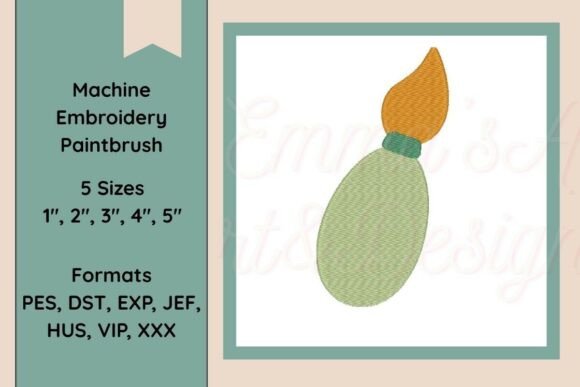
Review: Child Paintbrush Embroidery Design for Merch
As an embroidery designer who has spent years digitizing motifs and consulting with small business owners, I approach every new machine embroidery design with a critical eye. It is not enough for a motif to be cute; it must be functional, scalable, and capable of holding up under the rigors of commercial production. Recently, I evaluated the Child Paintbrush Embroidery Design, a motif marketed for art-themed projects and children’s crafts. While the initial description highlights its appeal for Back To School promotions, my review focuses on its viability for small business merchandise, branded patches, and professional apparel.
First Impressions: Balancing Playfulness with Professionalism
The first thing that strikes you about the Child Paintbrush Embroidery Design is its inherent friendliness. In a market saturated with overly complex or sterile corporate logos, this design offers a refreshing sense of approachability. The motif is simple, featuring a recognizable paintbrush shape that conveys creativity without visual clutter. For brands in the creative sector—such as local art studios, boutique craft shops, or independent bakeries that pride themselves on handmade quality—this aesthetic aligns perfectly with a brand identity that values warmth and authenticity.
However, simplicity in embroidery is a double-edged sword. A simple design leaves nowhere for poor digitizing to hide. Upon closer inspection of the preview images, the lines appear clean, suggesting that the stitch paths are optimized to prevent bunching. This is crucial for maintaining a premium look. If you are selling high-end custom apparel, your customers expect crisp edges, not tangled threads. This design seems to strike a balance between playful charm and the clean execution required for professional branding.
Real-World Applications for Small Business Merch
When considering how to integrate this digital embroidery file into your product line, versatility is key. Here is how I envision this design performing across various commercial embroidery projects:
- Branded Patches: This is perhaps the strongest use case. An embroidered patch featuring the paintbrush motif can serve as a versatile asset. You can sew these onto tote bags, denim jackets, or even include them as free gifts with purchase. The simple shape translates well to the merrowed or satin borders typical of patch production.
- Staff Uniforms and Aprons: For creative workshops or artisan cafes, staff aprons are walking billboards. Placing this design on the chest pocket area of an apron adds a touch of personality. It signals to customers that the staff are creators, not just servers. The apron embroidery application works well because the fabric is usually sturdy enough to support the stitches without puckering.
- Tote Bag Design: Canvas totes are a staple for Etsy sellers and boutique owners. The Child Paintbrush Embroidery Design serves as an excellent central focal point or a corner accent. It elevates a basic bag into a branded piece of merchandise that customers are proud to carry.
- Cap Embroidery: Caps require designs that are narrow and not too tall due to the curved surface. If the aspect ratio of this paintbrush is vertical and slender, it could work beautifully on the side panel or even the front, provided the stitch count is not excessive.
Technical Considerations and Potential Pitfalls
While the design shows promise, there are specific scenarios where you must proceed with caution. As a designer, I always advise testing before committing to a large production run. Here are the technical factors you need to evaluate:
Stitch Density and Fabric Texture: The description notes this is a high-quality design, but "high quality" can sometimes mean high stitch density. If you are embroidering on lightweight fabrics like thin cotton tees or silk blends, a dense design can cause puckering. Always use the appropriate stabilizer. For stretchy fabrics, a cut-away stabilizer is non-negotiable. For woven fabrics like canvas or denim, a tear-away may suffice, but test first.
Size Limitations: Because the motif is simple, shrinking it too much can cause the stitches to merge. If you plan to use this as a tiny label on a hem or a small tag, ensure the details remain distinct. I recommend stitching out a test sample at your intended minimum size to check for clarity. If the bristles of the brush blend into the handle, the design is too small for that specific hoop configuration.
Thread Color Contrast: The success of this design relies heavily on your thread choices. On dark uniforms, a light-colored thread will pop, but you must ensure the underlying fabric does not show through gaps in the stitching. Conversely, on white tote bags, subtle pastel threads might get lost. Always create a printable mockup or physical sample to verify visibility.
Enhancing Brand Identity and Customer Trust
In the world of small business merch, consistency builds trust. Using a cohesive set of design assets helps customers recognize your brand instantly. The Child Paintbrush Embroidery Design can be part of a larger visual language. If your brand uses hand-drawn elements or artistic typography, this embroidery complements that narrative. It tells a story of craftsmanship.
Furthermore, offering embroidered items increases the perceived value of your products. A printed logo is standard; an embroidered logo feels permanent and premium. When a customer receives a tote bag or cap with this thoughtful detail, it enhances their engagement with your brand. It transforms a transaction into an experience. For Etsy sellers, this differentiation can be the deciding factor in a competitive marketplace.
Practical Designer Notes for Production
Before you load this embroidery file into your machine for a client order or inventory batch, follow this checklist to ensure a flawless finished product:
- Check the Specs: The product description does not specify exact stitch counts, file formats, or compatible hoop sizes. You must verify these details with the seller. Ensure the file format matches your machine (e.g., PES, DST, JEF).
- Test on Scrap Fabric: Never stitch directly on your final garment. Use a scrap piece of the same fabric and stabilizer combination to test tension and registration.
- Evaluate Commercial Licensing: Confirm that your purchase includes a commercial license. Most digital files do, but terms vary. You need to be certain you have the right to sell items made with this design.
- Mockup for Approval: If working with a client, create a digital mockup showing the design on their specific garment. This manages expectations regarding size and placement.
- Consider the Audience: While labeled for children’s crafts, do not limit its use. Artistic adults appreciate whimsical design too. Market it broadly to creative professionals, teachers, and hobbyists.
In conclusion, the Child Paintbrush Embroidery Design is a strong contender for small businesses looking to add a touch of creative flair to their merchandise. It is not just a decorative element; it is a branding tool. By understanding its technical requirements and leveraging its visual appeal, you can create high-value products that resonate with your audience. Whether used for Back To School promotions or year-round boutique sales, this design offers the flexibility and charm needed to stand out in the crowded world of custom apparel and handmade goods.